Another consideration before you purchase will be whether or not you want to use a solvent-based MSA varnish or a water-based polymer one. Golden also make an MSA varnish in Matte, Satin and Gloss. If you choose to use an MSA varnish you will need to use a mineral spirit solvent for removal. Solvent resistant gloves and protective clothing are also recommended. For an absolute beginner, the lack of knowledge of varnishes can prove to be rather lethal.

We need to keep in mind that acrylic paintings need an isolation coat to get a removable varnish finishing while oil paintings do not need the isolation coat. This is because the oil varnishing coat can easily be removed by using the solvents. While traditional hard varnishes on oil paintings can give a very refined and glossy look, they are often vulnerable to yellowing and cracking, and can be hard to remove over time.

Varnishes are used as a finishing layer to protect artwork from discoloration, moisture, dirt, and UV rays. Which varnish you choose will affect the finished look. A glossy finish will make colors appear more vibrant, matte will reduce glare and soften colors, and a satin varnish will provide a finish somewhere between glossy and matte. Make sure work is thoroughly dry before applying, and allow time for the varnish to dry completely after each application. Please note that most of these products are extremely flammable and must be used with adequate ventilation.

Our picks below will help you find the best spray varnish for your project. Before varnishing your painting and if you are using a removable varnish, it is advisable to apply an isolation coat first. The isolation coat has a glossy and transparent finish and will provide a level base on which to varnish onto.

This permanent protective barrier seals all of the porous surface and will protect your painting if you ever need to remove or replace the layers of varnish above it. Varnish removal will involve using a solvent, which could damage the actual painting below if you do not create a permanent protective barrier. Using a gloss isolation coat, especially before applying a matte or satin varnish, will prevent a cloudy appearance from occurring in the varnish layer.

Acrylic paints dry out softer than the oil paints and hence they attract a lot of dust and dirt. This is one of the major reasons why artists choose to varnish their acrylic paintings either with removable or with non-removable varnish. For acrylic paintings, in case of thick paint, give a couple of weeks to dry out the paints before applying the isolation coat .

Once the isolation coat completely dries , proceed with another coat. While many artists use sponge or rolls for applying the varnish, these often lead to the formation of bubbles, uneven coverage, etc. For acrylic paintings, it is recommended to apply an "isolation coat" between the finished painting and the varnish. This consists of a coat of clear acrylic medium evenly applied over the entire surface. The purpose of the isolation coat is to protect the acrylic painting underneath from chemicals which may later be used to remove varnish.

While oil paintings naturally are not threatened by chemicals used to remove their varnishes, acrylic paintings can be. The isolation coat is used as a buffer to lessen the threat to the artwork. One of the less common varnishing techniques is the application of what is called an isolation coat or varnish. Isolation coats are only applied to acrylic paintings, and are commonly used by art conservationists as well as regular artists. An acrylic polymer varnish that can be applied water based and dries to a protective flexible surface that is dust-resistant. A final sealant for acrylic paintings on canvas can be applied with it.

This product provides a permanent gloss, which makes it an ideal choice for arts and crafts. Varnishes for oil paintings are removed with the same solvent that will remove the paint. The varnish should only be removed by a professional restorer using a cotton bud. Slowly, slowly, you stop when the cotton bud has colour on it.

You may be able to clean an old, dirty varnish by removing a thin layer of it with mineral spirits, without removing the whole thing. For acrylic paintings Golden polymer varnish can be removed with household ammonia which will not dissolve the paint. But it still changes the surface and the one time I had to remove it because I made a mistake with the varnish, the surface looked dull and roughed up a bit. There are a lot of times when the completed artwork does not come together aesthetically.

This happens when either the quality of the surface is a little bit uneven or the painting is glossy in some parts while it has a matte finish in the others. There exist some acrylic pigments that have a more lustrous finish than the others. Also, the sheen of an acrylic painting depends on the amount of water added to the colors. Different mediums of painting as well as distinct gels give a varied finishing. Varnish can help to unite the entire painting into one solid artwork. In order to unify the entire aspect of the painting, certain points need to be kept in mind.
One needs to decide on whether or not to use an isolation coat and make the varnish permanent. Acrylic and oil paintings can and should be varnished for preservation and aesthetically appealing outcomes. You cannot varnish watercolor or gouache paintings and drawings as effectively. For starters, these paints tend to imbibe the varnish and this shall lead to discoloration and permanent alteration in the color scheme of your artwork. Also, if you are looking for a removable varnish, an isolation coat before applying another varnishing layer works well with acrylic paints. Varnishing on a fully dried oil painting surface is also removable while there is no way to remove varnish from gouache and watercolor paintings .

Winsor and Newton is a time-tested brand and is known for their acrylic products. The colors do not change even after the drying process. The varnish has the same quality, making it the best choice for acrylic painters. It offers top protection for acrylic paintings on canvas. It provides another layer to prevent damage from dust, friction, and UV rays. Also gives a slightly glossy finish without affecting the colors.

What Do You Put On Acrylic Paintings To Protect Them Much of the same advice applies to varnishing an oil painting. Wait until it is bone dry, usually 6 months to a year. Practice first to get good at coating evenly and feathering in. Use a modern synthetic resin varnish for oil paintings, the old natural resins like damar varnishes usually yellow and deteriorate and most people have given up on them.

The surface of an oil painting is more durable than an acrylic painting but a varnish is still a good idea for protection. If your aesthetic decision is to not varnish because you don't like the glossy surface you can get a matte varnish for oil. Adding a final coat of varnish is the perfect finishing touch for your acrylic painting. Varnish provides a durable layer that will give your painting extra protection against damage. Some acrylic painters also choose to add an isolation coat between the painting and varnish layer.

This allows the varnish to be removed for cleaning without damaging the paint layer beneath. In these circumstances you would need to ensure that you are using a non-permanent, removable varnish – for example, soluvar. Isolation layer or not, it is important that your painting is left to dry thoroughly before varnishing. If your paintings contain both acrylics and oils, then it would be best to wait 6-12 months with varnishing, to make sure the oil paints are sufficiently cured. To seal the different absorbencies of the paint layers, we recommend starting with light layers of Archival Varnish Gloss w/UVLS, until an even glossy sheen is achieved.

After that build layers of desired sheen as needed with Archival Varnish w/UVLS (e.g. Satin or Matte). This technique allows you to built up sufficient layers of UV-protective varnish, that should protect your paintings significantly from UV-induced discoloration or fading. 6 spray coats of Archival Varnish w/UVLS is a good amount of layers and equivalent to 2 brush applied coats of MSA Varnish w/UVLS. Mixed media pieces can sometimes be tricky to varnish if the materials have different sensitivities. According to the Noodler's ink website, some of their inks are water resistant and other aren't.

To avoid solubilizing or blurring any water sensitive inks, it would be necessary to use a solvent based varnish. It might also be better to spray apply the varnish, rather than brush apply. The Archival Varnish would allow you to build up the varnish layers carefully with minimal surface contact. We recommend doing a small test on a scrap piece that contains the same materials as your mixed media painting, to check if there are any unforeseen issues. We generally recommend starting with MSA Varnish Gloss to build up layers until an even, glossy surface is achieved.
After that, Archival Varnish Satin or Matte could be applied, if a matter sheen is desired. A removable varnish will allow you to clean your painting and re-apply the varnish in the future. At this point if you wish, you may change the paintings surface appearance say from a matte varnish to a gloss or satin finish . You must apply an isolation coat if you are going to remove your varnish so the underlying paint layer isn't damaged. The removable varnishes are just as protective as the permanent ones. The paintings often lose saturation in their darker and deeper values.

Oil colors tend to dry, giving a variety of depth depending on the quality of the surface. Also, acrylic paints give a duller a finished look when they dry. Many artists use some acrylic binder that is glossy to attain a satin finishing, but this is not enough. An additional layer of glossy varnish always helps to give a professional edge to the painting, and this makes it more aesthetically appealing. Furthermore, finding the right varnish (gloss/ matte or satin) is an extremely personal choice. An acrylic polymer varnish that will provide a breathable, protective layer, this 12-ounce Liquitex spray is available in gloss, satin, and matte finishes.

This spray varnish will permanently adhere to the surface of your work and cannot be removed. Though a bit pricier than some of our picks, it is water-based, low odor, and safe for educational use. Always make sure you varnish your painting when it is completely dry, and remove any dust and dirt before applying in a dust-free environment.

A spray varnish applies two to three times faster, easier and more evenly than brush-on varnishes, and won't change the look of your original brushstrokes. For the highest quality varnish protection, choose from Krylon® UV Archival Varnish and Krylon® Conservation Varnish, both part of the Gallery Series Premium Artist Spray line. Acrylic paintings will benefit from isolation coats because all acrylic polymer emulsions (including varnishes, gels, mediums & paints) are dissolved and removed by the same chemical . A high quality varnish should be removable, and in fact is intended to be removed and re-applied as needed during the life-span of a painting. If the painting isn't protected by an isolation layer then there is a high likelihood that the varnish removal process will damage the painting's surface. Hello Will, I've been varnishing my acrylic paintings for some time, using an isolation coat and then applying a few coats of gloss polymer varnish with UVLS.

One painting not has dry bubbles on its surface, many equidistant to each other. LoL i know that its either too much water or too energetic mixing . I've heard of someone applying a hair dryer to the newly applied varnish to eliminate bubbles. Varnishing in a matte sheen and applying glossy paint layers on top is theoretically possible, however there are two things to keep in mind.
GOLDEN varnishes are removable and during a possible future varnish removal these paint layers would be at risk of being damaged. You could, however, place a label on the reverse of the stretcher bars, stating that the varnish should not be removed and indicate the layering. Polymer Varnish is designed as a topcoat for acrylic paints and offers a removable protective surface to the relatively soft acrylic paint layer. It has a harder film than most acrylic paints, which diminishes the susceptibility of the surface to dust and dirt, and provides increased protection from scratching, marring and moisture.

It has adequate flexibility to withstand normal handling conditions, including loose rolling. The product is not recommended for use on furniture or other surfaces subject to physical contact during use. Ultraviolet rays can lead to permanent damage to artwork. The oil or acrylic paintings that are specially created for professional use or for museums tend to fade and lose their original flare and this causes a permanent deterioration. The major reason for this is that the paints tend to imbibe light as time passes by, a procedure commonly known as photochemical damage. UV rays have an extremely short wavelength and fade the artwork.
This is where a varnish coat can act as a layer for UV protection. All the varnishes have Ultra Violet Light Stabilizers that prevent the painting. Removable varnishes also make the cleaning process of the painting quite easy. If you don't varnish, over time dust, dirt, moisture and pollution will change the look of your painting.

Acrylics especially are like "dust magnets" that will attract dust and dirt to the porous surface; however, all types of paintings are damaged in this way if they are left unprotected. A final varnish will seal the surface of your painting to keep the dust, dirt, moisture and pollution out. Choose a varnish that is removable so that if the varnish layer becomes discolored one day , the varnish layer can be easily removed and replaced with a fresh coat of varnish. It's a good idea to add the name of the varnish and other artist materials that you used on the back of your painting support for future reference.
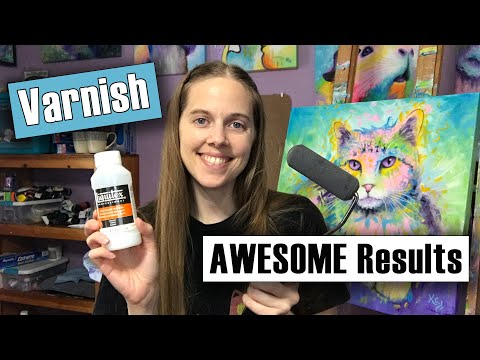
Liquitex archival 100% acrylic polymer varnish are non-removable, adds a satin sheen, protects and resists dirt retention. Improves surface durability - ideal when shipping or exhibiting. Resists discoloration - yellowing and fogging - caused by humidity, heat and UV. Depending on the substrate it allows surface moisture to pass through and breathe. Allows for easy cleaning without fear of damaging the acrylic paint film.

Has excellent levelling properties - will not hold brush marks. This tends to make the varnish coat permanent and non-removable, making it next to impossible to clean the dust and dirt effectively. Furthermore, when the oil paint dries, it contracts and this would make the varnish layer crack, giving an extremely unfinished and parched appearance.

When using matte varnish, many a time the artist is unable to mix the matting agent correctly. This can give a milky finishing to the artwork and the darker values that give depth are affected the most. Some varnishes are non-removable and any scratch or yellowing of the painting, in turn, causes a permanent negative alteration of the artwork that the artist did not desire for. Originally, removable varnishes had the primary purpose of preservation of the artwork against UV rays, dust, dirt, smoke, atmospheric pressure and a change of temperature. This non-porous layer provides beauty as well as protection to the paintings. But it is the total discretion of the artist whether or not to go for this extra, lengthy step.


